
You stretch the spot. It feels a little different. Later, you’re stretching it again.
If that sounds familiar, you may have come across the word fascia while looking for answers. It gets mentioned a lot, sometimes as though it explains every ache in the body. Let’s make it a bit less mysterious.
Fascia is connective tissue that surrounds and supports muscles and other structures throughout your body. It’s part of how those structures are organised and move together. [1]
You don’t need to learn an anatomy chart before booking a massage. The useful thing to know is that the area you call your tight shoulder includes several tissues working together.
Tight is a helpful description of what you feel. By itself, it doesn’t identify the exact tissue involved or prove that something is stuck.
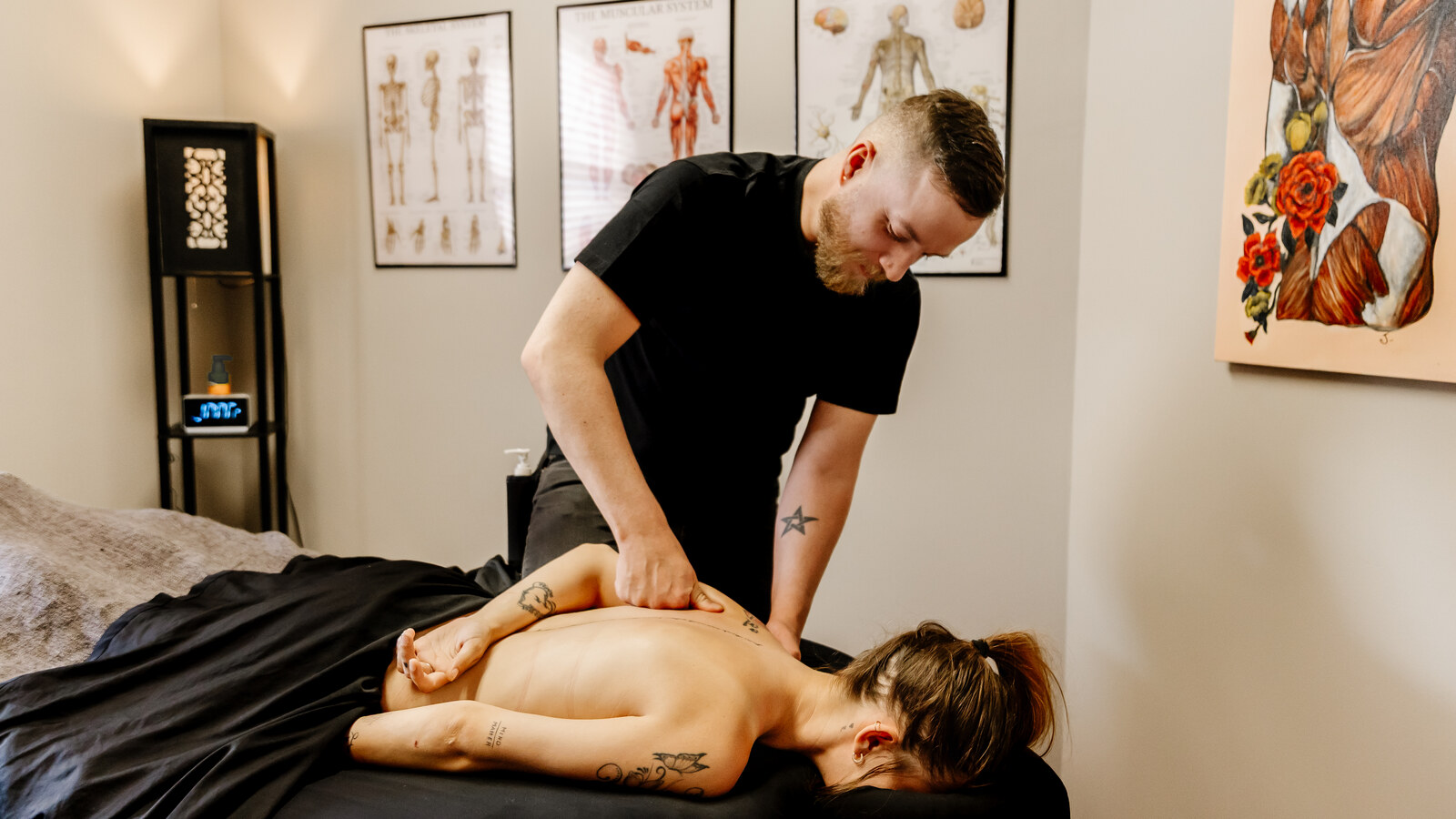
That’s why I’ll ask when you notice it, what movements bother you, what you’ve already tried, and whether there are other symptoms. I may also check movement and how the area responds to touch.
Your description and the assessment help guide the plan. I’m interested in what your shoulder lets you do, not just whether we can find a tender spot.
People often use release to describe an area feeling easier or less restricted after treatment. That’s a useful change to discuss, but the feeling alone doesn’t show that tissue has been physically pulled apart.
In my appointments, we can compare something practical before and after treatment: reaching overhead, turning your head, or another movement that matters to you.
If it feels easier, we can use that information. If it doesn’t change, or feels worse, that matters too. I can adjust the approach instead of pressing harder at the same spot.
Depending on what we find, I may use regular hands-on massage, a more focused technique, or movement during the appointment. I’ll explain any technique I suggest and get your consent.
We’ll also talk about what happens between visits. Does the tightness return after a particular activity? Is stretching comfortable? Is the area limiting something you want to do?
You don’t need to arrive with a diagnosis of tight fascia or choose a particular technique from a list. Bring the problem you want help with. We’ll work through the options together.
Pick one everyday movement and pay attention to when it feels restricted. Reaching for a cupboard, getting dressed, or turning to talk to someone can give you a more useful example than simply saying everything feels tight.
No measuring tape required. Just tell me what you notice.
If the same area keeps bothering you, book a massage therapy appointment in Moncton and we’ll take a closer look.